
 WORKS COVERED BY A 30 YEAR GUARANTEE
Insite Group · Timber Inspection & Treatment
Woodworm Treatment: Signs, Timber Surveys and What to Expect
Small holes in timber can raise big questions. Learn what woodworm means, why inspection matters and how a professional assessment helps establish whether treatment or repairs are needed.
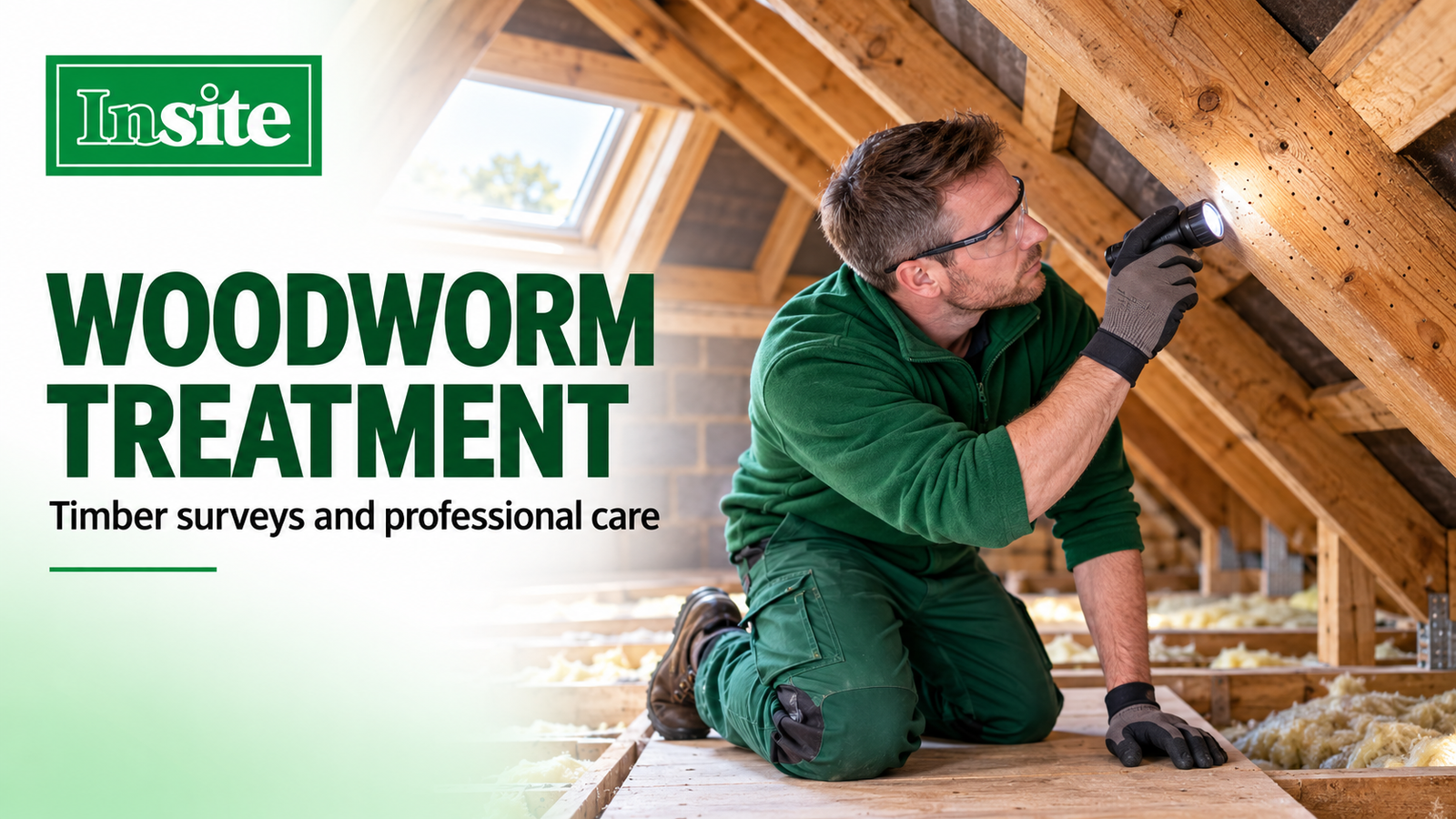
Understanding Wood-Boring Insects
Woodworm is a collective name for the larvae of several wood-boring beetles. These larvae feed within timber before developing into adults, which eventually emerge through small exit holes.
Finding holes does not automatically mean woodworm treatment is necessary. They may relate to an old infestation that is no longer active. The condition of the timber and evidence of current activity need consideration together.
How Can Beetles Damage Timber?
The common furniture beetle, Anobium punctatum, is one of the species associated with timber damage in buildings. Eggs are laid in suitable crevices, and the developing larvae tunnel within the wood.
The larval stage can last several years, with timing influenced by the species and conditions. Because activity takes place inside the timber, external appearance alone may not reveal the extent of damage.
Signs Worth Investigating
A specialist assessment helps distinguish historic damage from a problem that needs attention. Before arranging woodworm treatment, record what you have noticed without disturbing suspect structural timber.
- Small holes in timber: Note where they appear and whether you have noticed changes. Holes alone do not establish when the damage occurred or whether insects remain active.
- Fine dust near affected areas: Bore dust, known as frass, may be relevant. However, old material can also be dislodged, so dust needs interpretation alongside other evidence.
- Adult beetles: Photograph any suspected insects if you can do so safely. Identification helps determine whether they are associated with the damaged timber.
- Damaged or weakened wood: Crumbling edges, extensive tunnelling or concerns about structural members warrant assessment. Do not test their strength by loading or cutting them.
Why Start with a Timber Survey?
Appropriate woodworm treatment begins with identifying the problem. Insite’s surveyors assess the nature and degree of infestation and recommend suitable remedial work where required.
Roof timbers, floor joists and staircases may need different access arrangements. The assessment should also consider moisture conditions, previous treatments and whether damage affects the timber’s ability to perform its structural role.
Infestation Assessment
Establishing the likely insect and evidence of activity helps determine whether monitoring, environmental improvements or a targeted intervention is appropriate.
Timber Condition
A treatment does not restore wood already lost to tunnelling. Damaged structural members may require separate assessment, repair or replacement.
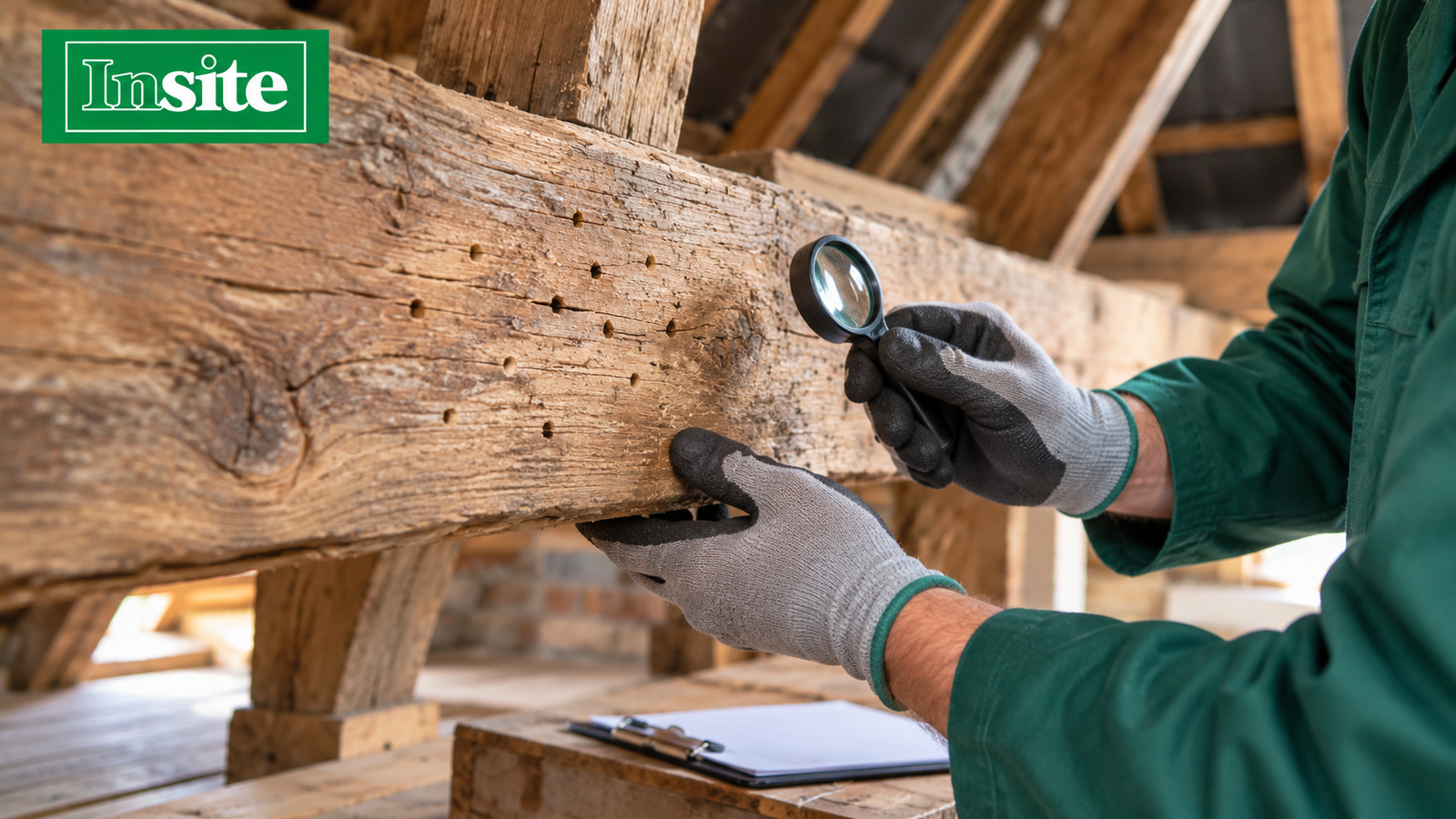
Timber Treatment Within a Roof Void
Where specified, woodworm treatment may involve applying a suitable preservative to accessible exposed timber. Insite’s service information describes pressure-spray application, with other treatment forms considered in particular circumstances.
The product and application method should follow the diagnosis and site conditions. Roof void access, nearby services and protection of the surrounding area need planning before treatment begins.
Professional application should follow the product requirements, including exposure controls and instructions for occupants. Ask what preparation is needed and when treated areas can safely be accessed again.
Consider Moisture and Fungal Decay Too
Timber condition can be influenced by leaks, poor ventilation and other moisture problems. Where these are present, addressing them forms an important part of the overall remedial approach.
Wood-boring insect damage and fungal decay are different issues, although both may need investigation within the same property. Read Insite’s guide to dry rot and wet rot causes, warning signs and treatment for related information.
What to Share When Making an Enquiry
Clear information helps the team plan an assessment. When enquiring about woodworm treatment, describe the affected areas and explain how the issue came to your attention.
- Property details and location: Include your postcode, approximate building age and whether the concern involves a roof void, floor, staircase or another timber element.
- Photographs and observations: Share safe, accessible views of holes, dust or visible damage. Mention when you first noticed the signs and whether they appear to be changing.
- Moisture and treatment history: Explain any known leaks, ventilation concerns or previous timber work. Existing reports and treatment records may provide useful context.
- Scope and practical arrangements: Ask what the survey covers, which areas need access and whether treatment, structural repairs and aftercare are included or quoted separately.
Explore our woodworm inspection and treatment service or use the Insite contact page to discuss your property.
Frequently Asked Questions
Do old flight holes mean treatment is needed?
Not necessarily. Historic holes can remain after an infestation has ended. An assessment should consider evidence of activity and the condition of the timber before recommending action.
Does timber spraying repair structural damage?
No. Preservative application does not replace missing or weakened wood. Structural concerns require separate assessment and any necessary repairs.
Will the whole property need treatment?
The appropriate scope depends on the findings. A localised concern does not automatically justify treating every timber throughout the building.
How long will the work take?
Timing depends on access, preparation, affected areas and the specified work. Ask for a property-specific programme and clear instructions about re-entry.
Discuss Your Timber Concerns with Insite
Considering woodworm treatment or unsure what the signs mean? Explore our specialist woodworm service and contact the team to discuss an assessment.
