
 WORKS COVERED BY A 30 YEAR GUARANTEE
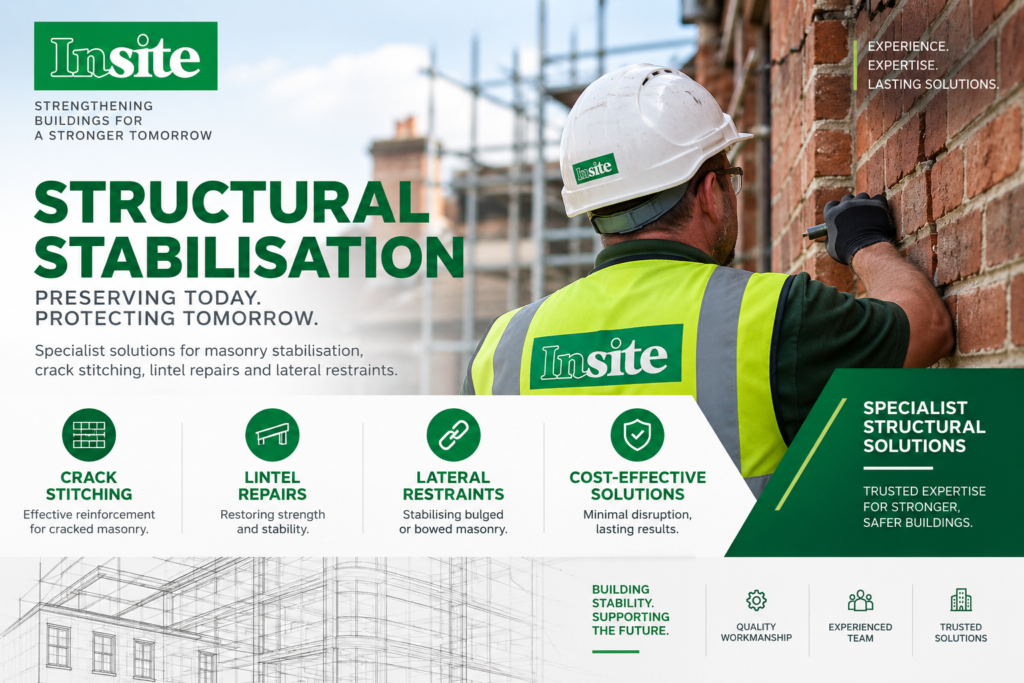
Structural stabilisation is an important part of maintaining the safety, strength and long-term condition of a building. Cracks, movement and distortion in masonry can develop for a number of reasons and should be assessed before they become more serious.
At Premise Property Maintenance, we provide practical solutions for remedial masonry stabilisation, including crack stitching, lintel repairs and lateral restraints. Our approach is designed to provide effective reinforcement with minimal disruption to the property.
What Causes Masonry Cracks?
Cracks in walls and masonry can occur because of ground movement, thermal changes, weathering or inadequate lateral restraint. Different types of cracking can indicate different underlying issues, so understanding the cause is an important part of selecting the right repair.
Movement can result in loads and stresses being redistributed through the building. Over time, this may lead to visible cracks, fractures or distortion around vulnerable areas.
Cracking is often more noticeable around:
- Door and window openings
- Building corners and junctions
- Areas affected by movement or inadequate restraint
- Older masonry and traditional buildings
Crack Stitching
Crack stitching is a commonly used remedial technique for stabilising cracked masonry. It involves installing specially manufactured stainless steel helical bars across the affected area to help reconnect the masonry.
The reinforcement is normally installed into suitable mortar bed joints or prepared slots. Resin grout can then be used to secure the bars before the area is repointed or made good.
This method can provide additional tensile strength while allowing the masonry to retain a degree of natural flexibility.
Lintel Repairs
Lintels support masonry above openings such as windows and doors. When a lintel becomes damaged or movement occurs around an opening, cracking can develop in the surrounding brickwork.
Structural stabilisation can help address these issues by reinforcing vulnerable masonry and restoring suitable support where required.
A proper assessment should be carried out before repair work begins to establish the condition of the lintel and surrounding structure.
Lateral Restraints
Bulging or bowed masonry can sometimes be associated with inadequate lateral restraint. In these situations, stainless steel lateral restraint systems can provide additional support.
Restraint bars can be installed through the outer masonry and connected into suitable internal structural elements. This helps redistribute tensile loads and improve the stability of the wall.
The exact installation method depends on the construction of the building and the location and severity of the movement.
Benefits of Masonry Stabilisation
Remedial reinforcement can offer an effective alternative to more extensive structural work where appropriate. By stabilising affected masonry, it may be possible to control cracking and improve the resilience of the structure.
Key benefits can include:
- Minimal disruption to occupants
- Cost-effective remedial solutions
- Reinforcement of cracked masonry
- Improved resistance to further movement
- Suitable applications for many traditional buildings
A Practical Approach to Structural Repairs
Every building is different, so structural stabilisation should be based on the condition and construction of the property. The cause of cracking should be considered before selecting a repair method.
Stainless steel reinforcement products are designed to provide strength while working with the existing masonry. This can be particularly useful for traditional buildings where maintaining the original structure is important.
Where suitable, remedial repairs can be completed without extensive removal or rebuilding of masonry, helping reduce disruption and associated costs.
Professional Masonry Stabilisation
Cracks and distortion should not simply be covered with mortar or decoration without understanding why they have appeared. An appropriate assessment can help determine whether reinforcement, repair or further investigation is required.
At Premise Property Maintenance, our team can provide practical remedial solutions for masonry problems, helping property owners address structural concerns efficiently.
From crack stitching and lintel repairs to lateral restraint systems, the right approach can help improve the stability and durability of affected masonry.
Structural Stabilisation for Traditional Buildings
Traditional buildings can require careful repair methods that respect their existing construction. Excessive removal of masonry may not always be necessary when targeted reinforcement can provide a suitable solution.
Remedial stabilisation techniques can help retain existing brickwork while improving resistance to cracking and distortion.
This approach can be particularly beneficial where property owners want to minimise disruption and preserve the character of the building.
Long-Term Protection
Structural stabilisation is not simply about repairing a visible crack. The objective is to address the masonry condition and provide reinforcement that can accommodate appropriate building movement.
When correctly specified and installed, remedial reinforcement can help provide greater resilience against future cracking and distortion.
If you have noticed cracks, fractures, bulging or movement in your masonry, professional assessment can help determine the most appropriate next step.
Structural Stabilisation You Can Rely On
Premise Property Maintenance provides practical structural stabilisation solutions designed to reinforce and protect affected masonry.
With options including crack stitching, lintel repairs and lateral restraints, remedial work can often be completed efficiently with limited disruption to the property.
Early attention to masonry problems can help prevent deterioration and support the long-term condition of the building. For reliable remedial masonry solutions, professional advice and appropriate repair methods are essential.
